% of technologists that received a pay rise in the last 12 months
45%
% of technologists that now receive additional monetary compensation beyond base salary
58%
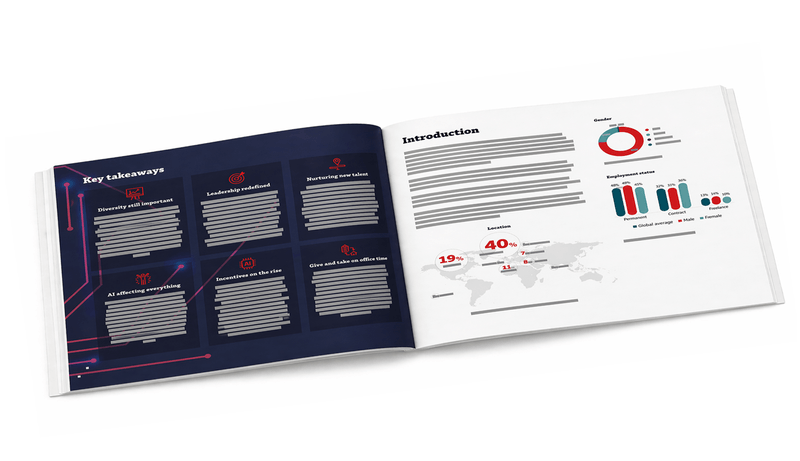
Based on insights from 3,600+ technologists across 53 countries, the Harvey Nash Tech Talent & Salary Report 2026 examines how compensation is evolving in the United States, what tech professionals value most in their roles, and how AI is influencing careers, leadership priorities, and in-demand skills. Whether you're a technologist comparing your salary against the U.S. market, a digital leader scaling high-performing teams, or an HR or talent professional focused on attracting and retaining top tech talent, this report delivers the insights needed to make informed decisions.
In this year’s report, you’ll discover:
|
|
Over the past year, the U.S. tech landscape has been dominated by headlines ranging from layoffs and economic volatility to bold predictions about artificial intelligence displacing jobs. However, a closer look at the data reveals a more measured and nuanced reality.
Our research highlights a U.S. tech workforce that is stabilizing rather than slowing down. Demand for critical skills remains resilient, compensation continues to trend upward across many roles, and technologists are actively adapting investing in new skills, reassessing career trajectories, and becoming more intentional about where and how they work.
At the same time, employers across the United States are under increasing strain. Talent shortages continue to challenge hiring efforts, workloads remain elevated, and retaining experienced professionals is proving more difficult. In this environment, having a clear, data-driven understanding of the market is essential.

The Harvey Nash Tech Talent & Salary Report 2026 represents the opinions and views of thousands of permanent, contract and freelance technologists from across the globe.





Technology continues to be one of the most well-compensated career paths in the United States but satisfaction with pay is becoming more complex.
Nearly half of technologists (45%) reported receiving a salary increase over the past 12 months, and sentiment remains optimistic, with 47% expecting another raise in the year ahead. Career mobility is also visible, with 21% securing a promotion, although advancement does not always come with a corresponding increase in pay. The structure of compensation is evolving as well: 58% of U.S. technologists now receive additional earnings beyond base salary, including bonuses, incentives, or performance-based rewards. However, rising workloads, cost-of-living pressures, and shifting expectations mean that compensation alone is no longer enough to ensure satisfaction or long-term retention.
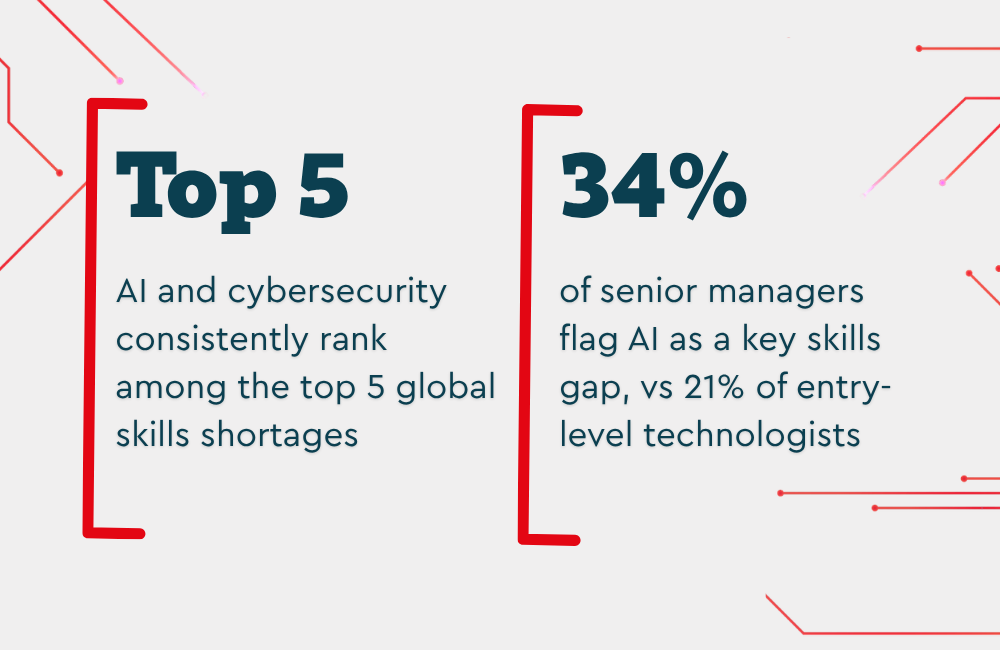
Skills shortages continue to shape the U.S. tech labor market in 2026. Artificial intelligence and cybersecurity remain firmly among the most in-demand and hardest-to-fill skill areas nationwide. Perceptions differ by seniority: 34% of senior leaders identify AI as a critical capability gap, compared with 21% of entry-level technologists. Demand for software engineering, cloud, and platform expertise also remains consistently high across industries, underscoring the ongoing challenge organizations face in securing experienced technical talent.
For employers in the United States, this translates into sustained competition for experienced professionals even as candidate behavior becomes more measured and risk aware.
AI is now firmly embedded in the day-to-day work of most technologists in the United States, with 75% reporting access to AI tools in their roles. While availability is widespread, structured upskilling and clearly defined strategies are still catching up creating both risk and opportunity for employers that move early and effectively. When it comes to perceived impact, 22% believe AI could take on more than half of their responsibilities within the next five years. Even so, sentiment is more measured than alarmist, with around four in ten feeling some level of risk to their role. Most U.S. technologists are focused on how AI can enhance their skills, productivity, and career growth, and those working closest to AI tend to have the most grounded view of its potential. Preparation, however, remains inconsistent: only 36% say their organization is actively investing in AI upskilling, and one in five report the absence of a clear AI strategy. AI is not replacing technologists, but it is reshaping what makes them valuable in the U.S. workforce.
Flexible working has become a core expectation among U.S. technologists, with 52% rating hybrid work as a key factor when assessing new opportunities. For many, flexibility now rivals compensation, with 41% willing to trade a portion of salary for increased work-from-home options. There are signs that employer policies and employee preferences are gradually aligning. However, pressure on workloads persists: 53% report an increase in responsibilities even as team sizes stabilize, and only 40% feel adequately supported in maintaining a healthy work-life balance. Support for wellbeing continues to vary significantly across organizations and industries, with 19% stating that their employer does not provide sufficient support for mental health.
For leaders, the challenge is no longer whether to offer flexibility - but how to balance productivity, collaboration, wellbeing and sustainable performance. Download the report to explore what matters most to technologists today.
How important is hybrid working to you?
While 55% of U.S. technologists say they are satisfied in their current role, career mobility remains high, with 40% planning to move within the next 12 months. Compensation remains the leading motivator for change, cited by 53% of those considering a move, followed by career advancement opportunities at 39%. Company culture is also a key factor, influencing nearly a third (32%) of decisions. Altogether, this points to a workforce that is generally content but still highly open to new opportunities. For organizations aiming to attract tech talent in the U.S. over the coming year, a compelling and well-rounded employee value proposition not just higher pay will be critical.
Find out what technologists value the most when it comes to compensation and benefits.
Purpose is playing an increasingly important role in career decisions, with 84% of U.S. technologists saying an organization’s mission matters when choosing where to work. However, fewer respondents (59%) place the same level of importance on an organization’s approach to diversity, equity, and inclusion (DEI). This shifts among underrepresented groups, rising to 71% for women and professionals from ethnic minority backgrounds in the U.S. Despite ongoing initiatives, confidence in industry-wide progress remains limited, with fewer than half believing the tech sector is doing enough to improve female representation. Leadership expectations are also evolving today’s technologists place greater value on leaders who not only understand technology deeply but can also communicate its impact across the business, while fostering inclusive, ethical, and purpose-driven workplace cultures.
% say an organization’s approach to DE&I matters when choosing a role
Female respondents
Ethnic minorities